Most of us live inside stories we did not consciously choose.
They hum beneath our decisions, shape our expectations, and quietly determine what we believe is possible.
I read a book a few months ago that introduced the idea of overstories: the invisible canopies under which communities live. Culture, belief systems, inherited values, shared histories—these create a kind of atmospheric pressure that shapes lives within those communities, influencing outcomes long before anyone names them.
It struck me, as I closed the book, that people live under overstories too.
Each of us carries a narrative canopy over our lives, assembled from experience, circumstance, memory, and meaning. Some overstories are shaped by rupture—loss, disappointment, repeated misalignment. Others appear to glide on uninterrupted success. But the power does not lie in the facts of the overstory. It lies in the interpretation—in the lens through which we decide what our story means.
That lens becomes what I think of as our default setting.
If a difficult chapter is framed as a life sentence—proof that happiness is inaccessible, that love will always disappoint, that ease belongs to other people—then despair becomes the baseline. Helplessness hums in the background. This is hardly surprising. The universe, irritatingly consistent, has a way of rising or lowering itself to meet the expectations we set for it.
But beneath our many personal overstories, we all share a larger one.
It is the overstory of lives that are perpetually unfolding.
No matter how fixed things may feel, we are always in motion—becoming, revising, shedding, arriving. Some seasons bruise. Others astonish. The constant is movement. Change is not the interruption; it is the structure. Knowing this does not spare us pain, but it invites a different posture toward it: humility instead of rigidity, curiosity instead of resignation, tenacity instead of retreat.
Wherever we find ourselves—at the bottom of despair or the crest of joy—it serves us to look closely at the landscape we’re standing in. What is this moment asking us to learn? Who is it quietly shaping us into? What action, however small, is being invited?
We are not merely characters in our lives. We are co-authors. And while fear and pain can paralyze, they must not be allowed to fossilize us. Vigilance matters. We must ask what might loosen the grip on what ails us, then make the decisions required—and carry them through. Action, even imperfect action, is an act of grace toward ourselves. It says: I am still participating.
Participation recalibrates the default setting.
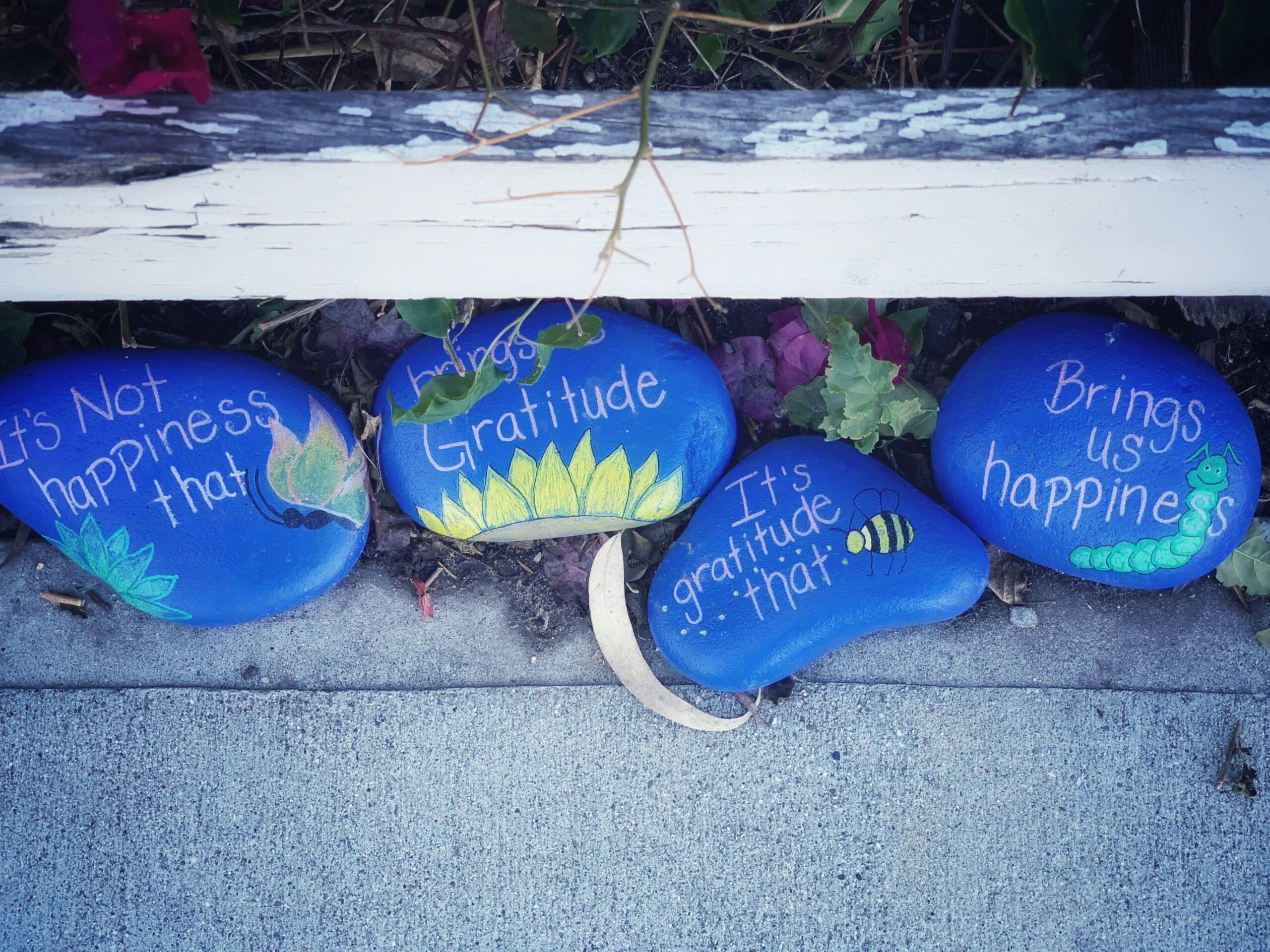
Over time, it draws us toward the only setting sturdy enough to hold the full complexity of a life: gratitude. Not as denial. Not as forced optimism. But as recognition—of what remains intact, of what has endured, of what is still offering itself.
Gratitude does not require that everything has gone well. It asks only that we notice what has carried us this far.
So take a full inventory of your own journey. If you are reading this from the shelter of a home, from work that sustains you, while waiting for a friend at a café, listening to the quiet industry of your children in the next room, or sitting on a plane poised for departure—has it not all, in some way, been worth it to arrive here? Even if the moment is imperfect. Even if it carries longing, you are here. Presence is not nothing. It is the ground from which change grows.
In the space where we choose the overstory of our lives—and decide the setting to which we return when things go dark—lies our real power. What does not break us can shape us, refine us, strengthen us. Every experience becomes a note in the composition of who we are. Some dissonant. Some soaring. All essential to the music.
If you love this moment, stay with it. And if you don’t, ask what can be done to improve it. That question—quiet, practical, hopeful—is where agency lives. It is how we meet life halfway.
As we welcome 2026, may we do so with gratitude—not only for what has been easy or beautiful, but for what has shaped us, stretched us, and kept us becoming. Gratitude is not the reward at the end of the journey. It is the way we learn to walk it—awake, attentive, and aware that even now, life is still unfolding in our hands.